
Janice Williams Whiting
Artist’s Statement
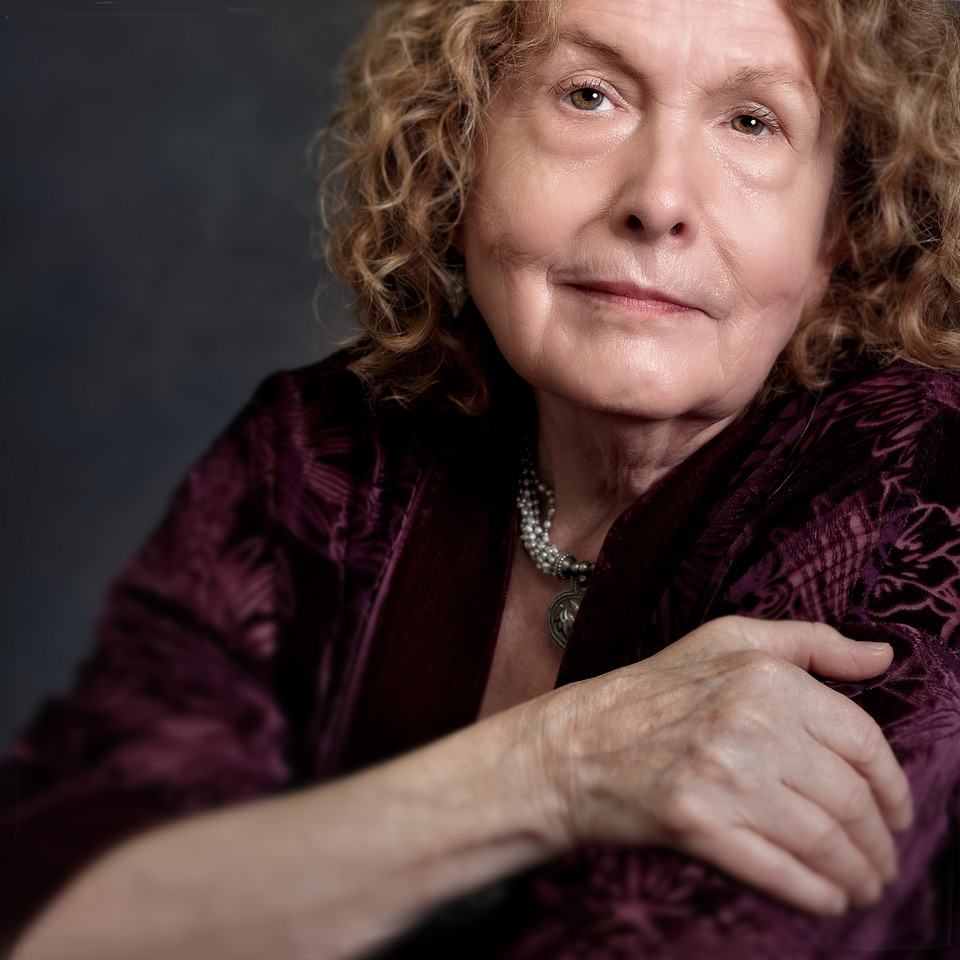
As a female artist, I have become increasingly aware of the way our society views women. The world of art is filled with feminine icons, including Eve, the Mona Lisa, Marilyn Monroe, or the Virgin Mary. These images of the feminine not only capture the American imagination but also help to perpetuate contemporary attitudes about women and their sexuality that can both liberate and enslave women in 21st century America.
I continue to examine our culture’s willingness to oppress and objectify all women. Our society’s attitudes about sexuality, age, and perceived value continue to weigh on me as I get older. It is my hope that these paintings might lead some viewers to an awareness of our society’s systematic marginalization and degradation of the older woman.
All women in U.S. society are faced with a constant barrage of messages about beauty and sexuality, telling them that to be desirable they must emulate the characteristics of both innocence and overt sexuality. This contradictory approach to feminine value is best summarized in what is known as the “Virgin/Whore” dichotomy. Every woman must repeatedly choose between being perceived as either a sexually benign creature of limited power, or a sexualized creature with power over both them and others.
All women in U.S. society experience the negative effects of sexual stereotyping. Often, women who have entered the second half of their lives discover that the negative impact of such attitudes is amplified by age. As women in American contemporary society age, many become cognizant of the fact that their ability to be viewed as attractive, sexual human beings is oppressed. Women who have reached this age discover that they are frequently told they are “too old” to:
• Wear particular clothes,
• Go to particular events, or
• Have particular thoughts.
Rather than being encouraged to follow our own feelings, thoughts and desires, we are increasingly told to cover up, blend in and “act our age.” Our society, our daughters and even our contemporaries are quick to point out the socially defined imperfections of age, as if they are scars that make others feel uncomfortable when exposed. All of this ignores the simple fact that a woman’s sexuality does not disappear at 30, 40, 50 or 70. It ignores the fact that beauty can be found in women of all cultures, ages, and body types.
It is for the above reason that I chose to explore these themes using the self-portrait. A nude self-portrait may be “TMI.” The question is why?
It is my desire that viewers of this show will be confronted by visions of beauty and sexuality, as well as images of social oppression and the inevitable deconstruction of women’s self-image; and it is my hope that all viewers question why our society values youth as the pinnacle of beauty.
Biography
Whiting joined the faculty of Augusta College in 1981 and remained through its growth into Augusta State University and, later, Augusta University. Across those decades, she built much of the program’s core studio and color curriculum, teaching drawing, painting, watercolor, world humanities, and the color experience and theory course that anchored the department for successive classes. She led students on repeated study trips through Italy, pairing studio practice with direct study of the works and architecture that informed her own. Beyond the classroom, she helped shape the department’s direction: she chaired the search committee for the William S. Morris Eminent Scholar in Art and served on the Pamplin Faculty Council, the College Council, and promotion and tenure review. Her counsel extended into the community, where she advised on the gallery at the Jessye Norman School of the Arts. The institution recognized her with its Outstanding Faculty Member Award in 2005, and colleagues described her influence as pervasive; a substantial share of the department’s later faculty and the region’s art teachers first studied under her. With her husband, Dr. Raymond Whiting, she established two endowed scholarships — one in art, one in athletics — that continue to support students in her name.
Her work examines the human form, spirituality, gender, architecture, and art history, carrying a single image across oil, pastel, gouache, and print. It has been exhibited at the Institute of Contemporary Art, Boston; the Cleveland Museum of Art; the New-York Historical Society; the Philbrook; the San Jose Museum of Art; and the Honolulu Academy of Arts. The Morris Museum of Art and the Takarazuka Mayor’s Collection, Japan, hold her work. Her honors include a lifetime fellowship in the Society for the Arts, Religion and Contemporary Culture and painting residencies in Newfoundland.
Showing 1–9 of 25 results
-
 Janice Williams Whiting
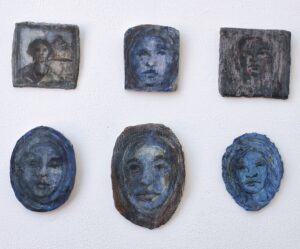
Ancient Ancestor Series 1
-
 Janice Williams Whiting
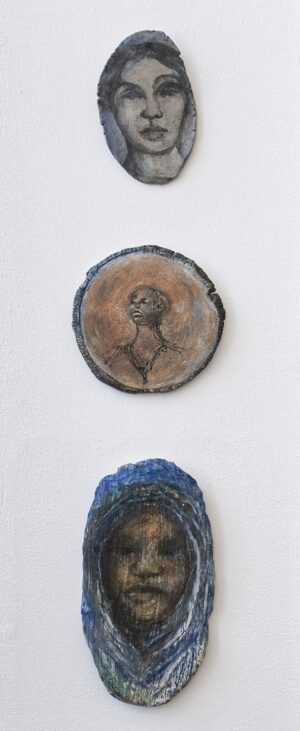
Ancient Ancestor Series 2
-
 Janice Williams Whiting
Dancing Figures and Flowers
-
 Janice Williams Whiting
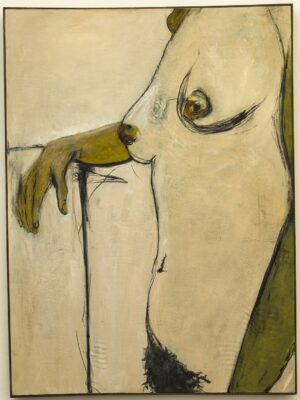
Details of a Woman #2
-
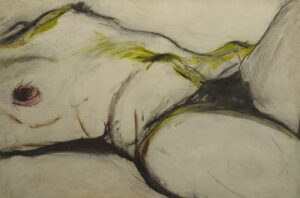 Janice Williams Whiting
Details of a Woman #3
-
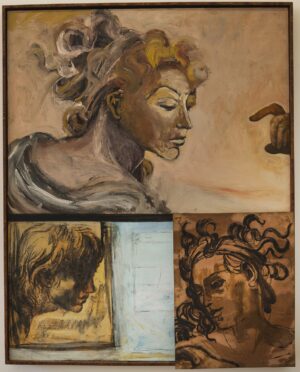 Janice Williams Whiting
Icon Series Redux: Redemption
-
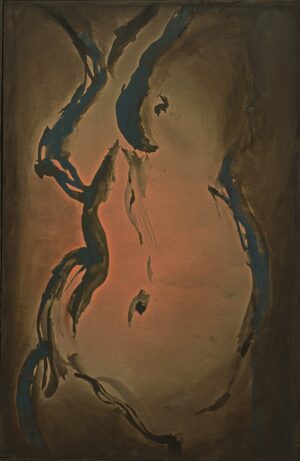 Janice Williams Whiting
Torso
-
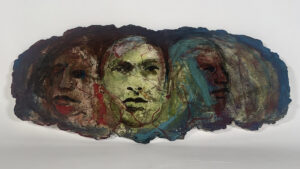 Janice Williams Whiting
The Layers of Change Stare Back
-
Janice Williams Whiting
The Layers of Change in the Beginning